The rise of automation has sparked a significant debate in the cleaning industry: can robot cleaners replace manual cleaning? According to a recent report by IBISWorld, the global cleaning robot market is projected to reach $10 billion by 2025. This reflects an increasing demand for efficient cleaning solutions amidst busy lifestyles. Yet, questions about effectiveness persist.
Experts like Dr. Emily Chen, a leading researcher in robotic technologies, state, "While robot cleaners offer convenience, they still struggle with complex tasks." This sentiment highlights the limitations of robotic cleaners. They excel in repetitive tasks like vacuuming but falter in deep cleaning efforts that require human judgment and adaptability.
Furthermore, industry insiders note that human cleaners provide a personal touch and critical problem-solving skills that robots cannot replicate. A 2022 survey indicated that 45% of respondents preferred manual cleaning for thoroughness. As technology evolves, the question remains: can robot cleaners replace manual cleaning, or will they serve as complementary tools in a cleaning strategy? The answer is still unfolding.
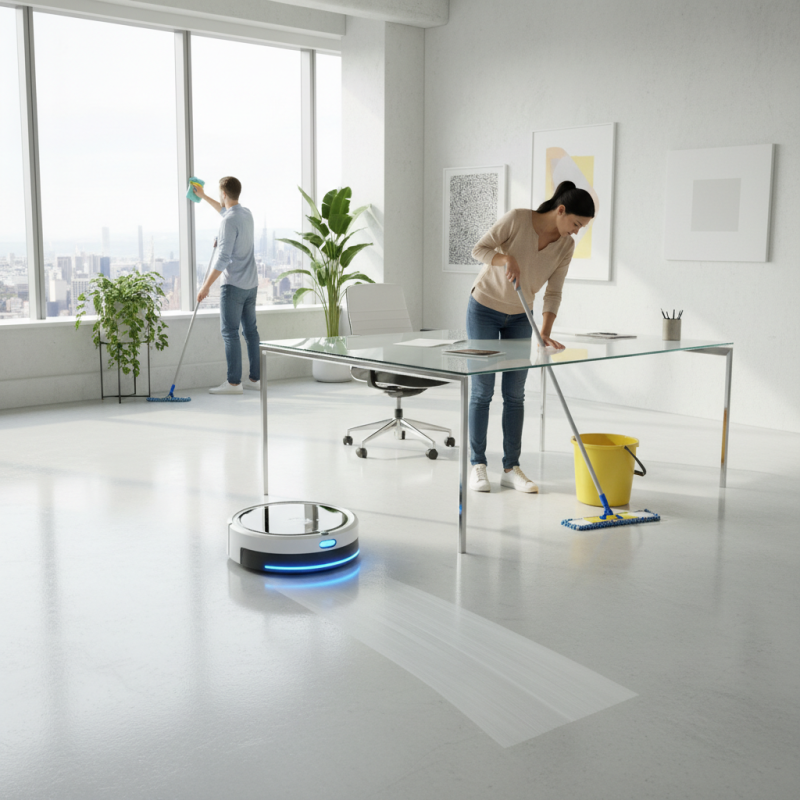
The evolution of robot cleaners has significantly changed household cleaning routines. In the early stages, basic vacuuming robots had limited capabilities. They struggled to navigate obstacles and often missed spots. However, advancements in technology have led to smarter devices. Modern robot cleaners now feature sensors and mapping technologies. They can efficiently navigate homes, avoiding furniture and cleaning every corner.
Yet, despite these improvements, manual cleaning remains a necessity. Robot cleaners may miss deeply embedded dirt or stains that require more effort. They also tend to struggle with varied surfaces, such as rugs and tiles. Users often find themselves needing to manually clean those areas. This combination of automation and manual effort creates a balance that many households must navigate.
The integration of artificial intelligence in robot cleaners is promising. Future models could learn cleaning patterns and adapt their methods. However, they still lack the human touch. Manual cleaning ensures thoroughness and attention to detail. This complex relationship raises important questions about the future of household cleaning. Will robots fully replace manual efforts, or will both coexist?
Robot cleaners have become popular in households. They promise to save time and effort. But how do they compare to traditional manual cleaning methods? Efficiency is a key factor in this comparison.
Manual cleaning often requires a physical effort. It’s a workout that can lead to fatigue. However, this method allows for detailed touch. You can focus on specific areas needing attention. In contrast, robot cleaners operate on a schedule. They work autonomously, covering more ground in less time. Yet, they may miss corners or spots that require thorough scrubbing.
Tips for maximizing cleaning efficiency include setting a regular schedule for robot cleaners. This ensures every corner is addressed systematically. For manual cleaning, break tasks into manageable sections. This helps maintain focus and reduces exhaustion. Always remember, technology has limits. Balancing both methods may provide the best results.
Robot cleaners are gaining traction in homes and offices, but what technology powers these devices? At the heart of these robots is advanced sensing technology. Many utilize LiDAR, which maps surroundings to navigate effectively. This precision helps in avoiding obstacles while optimizing cleaning paths. According to a recent industry report, the global robot cleaning market is expected to reach $4.8 billion by 2025, reflecting a growing trust in this technology.
Artificial intelligence (AI) plays a crucial role as well. With machine learning, robot cleaners improve over time, adapting to various floor types and clutter. They collect data on cleaning habits, allowing for efficient cleaning schedules. However, despite these advancements, robots may miss some spots, especially in corners or under furniture. Human oversight remains essential for thorough cleaning.
Tips: Regularly check and clean the sensors of your robot. Dirt buildup can hinder performance.
Furthermore, battery life is a consideration. Most robots last about 60 to 120 minutes per charge. Users might find they need to recharge more often than expected, leading to interruptions. The expectation of complete autonomy needs some adjustment.
Tips: Create a cleaning schedule that matches your robot's battery life to avoid interruptions.
While the technology is impressive, it's not foolproof. Human intervention is still necessary for more demanding cleaning tasks. Balancing robot use with manual efforts may yield the best results in maintaining a clean environment.
| Feature | Robot Cleaners | Manual Cleaning |
|---|---|---|
| Time Efficiency | High | Low |
| Cost | Moderate | High |
| Maintenance Required | Low | High |
| Cleaning Quality | Consistent | Varies |
| User Control | Limited | Full |
The adoption of robot cleaners is influenced by various key factors. Consumer perceptions play a significant role in the acceptance of these devices. Many homeowners remain skeptical about the effectiveness of robot cleaners compared to traditional methods. A study by the International Federation of Robotics shows that only 51% of potential users believe these devices can clean as thoroughly as manual efforts.
Another crucial factor is the cost of technology. While prices have decreased in recent years, many consumers still view robot cleaners as a luxury rather than a necessity. An analysis from Statista indicates that around 37% of homeowners cite price as a barrier to purchase. This perception raises questions about the value of automation in the domestic cleaning sector.
Moreover, the technological limitations of robot cleaners also hinder their adoption. While advancements have been made, many devices still struggle with complex home layouts. Reports suggest that consumers desire more adaptable cleaning solutions. They want devices that can navigate obstacles efficiently and address various floor types. This indicates a need for ongoing innovation in the industry to meet consumer expectations fully.
Robot cleaners have gained popularity for their convenience. However, they have limitations that cannot be overlooked. One major challenge is their inability to perform deep cleaning. While they excel at surface-level tasks, they often struggle with tough stains or grime buildup. Many homeowners still find themselves reaching for traditional cleaning tools for those more stubborn messes.
Another issue with robot cleaners is their reliance on technology. They can malfunction or get stuck in tight spaces. This dependency on sensors means that they may not always navigate effectively around furniture. Regular maintenance, such as cleaning brushes and sensors, is necessary to keep them functioning well.
Tips: Consider using a manual cleaner for those hard-to-reach places. If you invest in a robot cleaner, ensure it has a good warranty for replacements. It’s also advisable to keep the cleaning area tidy to minimize blockages.
This chart compares the efficiency and effectiveness of robot cleaners to manual cleaning efforts across different cleaning tasks. The data illustrates how robot cleaners perform in vacuuming, mopping, and dusting compared to traditional manual cleaning methods.
: Robot cleaners are designed to automate household cleaning tasks, like vacuuming and sweeping.
They have become smarter, with sensors and mapping technologies that help navigate homes better.
No, manual cleaning is often still necessary for deep dirt or tricky surfaces.
They may miss spots or struggle with different surfaces like rugs and tiles.
Set a regular cleaning schedule to ensure all areas are addressed systematically.
Many doubt their effectiveness compared to traditional cleaning and see them as luxuries.
The cost remains a concern for many homeowners, impacting their willingness to buy.
They want devices that can adapt better to various home layouts and obstacles.
No, they often lack the thoroughness and attention to detail that manual cleaning offers.
Future models may use AI to learn patterns, making them more efficient in their cleaning methods.
The article "Can Robot Cleaners Replace Manual Cleaning Efforts?" explores the advancements and implications of robot cleaners in household cleaning. It begins with an overview of the evolution of these devices, highlighting their increasing sophistication and integration into daily life. By comparing the efficiency of robot cleaners versus traditional manual cleaning methods, it becomes evident that while robots can offer convenience and time savings, they may not achieve the same level of thoroughness as human cleaning efforts.
Delving into the technology behind robot cleaners, the article mentions various sensors and algorithms that enhance their cleaning capabilities. However, factors influencing the adoption of these devices, such as cost, maintenance, and user familiarity, are also discussed. Despite their potential, limitations and challenges remain, particularly in complex cleaning scenarios. Ultimately, the question arises: can robot cleaners replace manual cleaning? The answer appears to be nuanced, indicating that while they can complement human efforts, a complete replacement may not yet be feasible.
NovaBot Robot