Cleaning robots have transformed the way we maintain our living spaces. As these machines become integral to modern households, understanding their technology helps us appreciate their capabilities. A key area of focus is what sensors do cleaning robots use for optimal performance. Sensors play a vital role in ensuring that these machines navigate effectively and clean efficiently.
The most common sensors include ultrasonic, infrared, and LIDAR. Ultrasonic sensors help detect obstacles. Infrared sensors are used to identify dirt and dust. LIDAR technology allows for mapping and detailed navigation. Each of these sensors contributes to a robot’s ability to clean specific areas effectively. However, the integration of these sensors isn't always flawless.
Challenges persist with sensor calibration and environmental factors. Dirty lenses can hinder performance. Reflective surfaces may confuse sensors. Exploring what sensors do cleaning robots use reveals both their potential and limitations. Understanding these aspects can guide users in making the best choices for their cleaning needs.
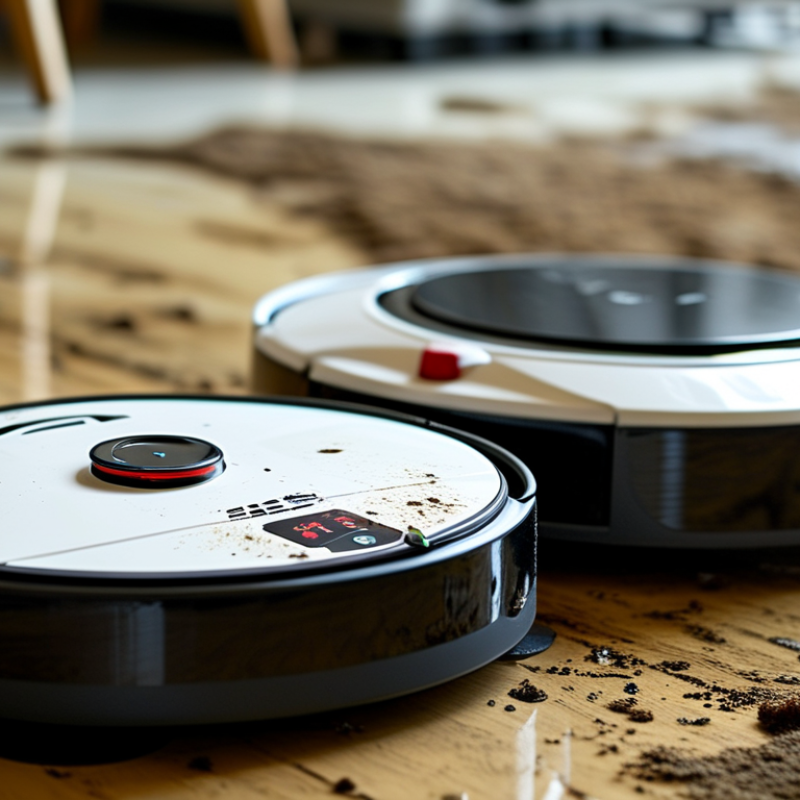
Cleaning robots are revolutionizing how we maintain cleanliness in our spaces. The effectiveness of these machines largely depends on the types of sensors they utilize. Advanced sensors enhance navigation, obstacle detection, and dirt recognition, leading to optimal performance.
Most cleaning robots employ various types of sensors. Laser-based sensors offer precise mapping capabilities. They allow robots to create accurate layouts of rooms. Ultrasonic sensors help detect obstacles and changes in environment. They allow robots to avoid collisions. Infrared sensors can identify dirt levels on surfaces, adjusting cleaning intensity as needed. According to a 2022 report by the International Federation of Robotics, the demand for cleaner, smarter sensors has increased by 25% globally.
Tips: Regularly clean the sensors of your robot to ensure maximum functionality. Dirt and dust can hinder performance significantly. Also, ensure your robot's software is up-to-date for the best operation, as outdated systems may not utilize sensor data effectively.
While technology has made great strides, some limitations persist. For instance, certain sensors may struggle in dim lighting or reflect off highly polished surfaces. This can lead to miscalculations in navigation or cleaning efficiency. As advancements continue, addressing these imperfections will be crucial for future developments in cleaning robots.
Infrared sensors play a crucial role in the navigation systems of cleaning robots. These sensors emit infrared light and detect reflections off nearby objects. This technology allows robots to map their environment effectively. According to a recent industry report, nearly 70% of cleaning robots utilize infrared sensors for enhanced navigation accuracy.
These sensors help robots avoid obstacles and create virtual boundaries. The ability to detect changes in distance is essential for effective movement and direction. However, infrared sensors can struggle in direct sunlight, leading to potential navigation errors. This limitation highlights the need for continuous improvement in sensor technology.
Tip: Regularly clean your robot’s infrared sensors to maintain their accuracy. Dust and debris can affect performance, leading to inefficient cleaning.
Additionally, the integration of infrared sensors with other technologies, such as LIDAR, is gaining traction. While infrared sensors excel in simple navigation tasks, combining them with advanced systems can offer a more reliable solution. It’s essential for developers to consider sensor limitations and explore hybrid systems for optimal outcomes.
Tip: Monitor your robot’s performance in various lighting conditions. This can help you identify issues early and ensure effective cleaning routines.
Ultrasonic sensors play a vital role in the performance of cleaning robots. These sensors emit sound waves to detect obstacles in the robot's path. When the sound waves hit an object, they bounce back. This return signal helps the robot identify distances and shapes of objects. According to a 2022 market analysis, ultrasonic sensors can improve navigation accuracy by up to 30%. This enhancement leads to more efficient cleaning sessions.
The effectiveness of ultrasonic sensors isn't without limitations. They can struggle with soft materials, like curtains, that absorb sound waves. This may result in missed obstacles or inefficient cleaning routes. In certain environments, such as open spaces, the performance can drop. Robots may misinterpret distances. These challenges highlight the need for continuous improvements in sensor technology.
Moreover, environmental factors can affect ultrasonic performance. Temperature and humidity can distort sound waves. A sensor that works well in one condition may fail in another. This variability underscores the importance of integrating multiple sensor types. Combining ultrasonic sensors with other technologies can create a more robust cleaning solution. Such advancements could pave the way for smarter, more reliable cleaning robots.
Camera systems play a crucial role in the mapping and navigation capabilities of cleaning robots. These sensors provide the robot with a visual understanding of its environment. They capture images and identify obstacles with precision. This technology allows the robots to create accurate maps of rooms. These maps help the robots navigate effectively, avoiding unnecessary collisions.
However, not all camera systems function perfectly. Some may struggle in low-light conditions, which can lead to navigation errors. In challenging environments, like cluttered spaces, their performance can decline. Sometimes, the algorithms processing camera data need refining to enhance efficiency. This reflective gap in performance highlights the importance of continuous improvement in technology.
The integration of advanced camera systems can enhance a robot's efficiency significantly. Enhanced imaging can ensure better path planning and obstacle avoidance. Though breakthroughs are being made, challenges remain. Balancing cost and performance is an ongoing discussion in the field. Embracing these challenges can lead to more reliable and effective cleaning robots in the future.
Cleaning robots rely heavily on advanced sensors for optimal performance. Among these, gyroscopes and accelerometers are crucial for enhancing stability and navigation. Gyroscopes offer angular velocity data. This allows robots to maintain balance while maneuvering through various terrains.
Recent industry reports indicate that robots equipped with gyroscopic technology show a 30% improvement in precision during complex movements. Conversely, accelerometers measure linear acceleration, helping devices understand external forces acting on them. Robots use this data to adjust their paths effectively. The combination of these two sensors creates a feedback system that promotes enhanced responsiveness.
However, challenges remain in sensor integration. Not all cleaning robots operate seamlessly with these components. Inaccurate readings from sensors can lead to inefficient cleaning patterns. Moreover, environmental factors, like uneven floors, can disrupt balance. Robotics engineers continue to refine algorithms to address these issues while seeking a more reliable performance in diverse settings. As technology progresses, the possibilities for enhancing cleaning robots are vast.
: Cleaning robots typically use laser-based, ultrasonic, and infrared sensors for navigation and dirt detection.
Laser-based sensors help create precise room layouts, enhancing the robot's mapping abilities.
Ultrasonic sensors detect obstacles in the environment, helping robots avoid collisions effectively.
Infrared sensors identify surface dirt levels, adjusting the cleaning intensity as required.
Regularly clean the sensors and keep the software updated for optimal functionality.
Sensors may have difficulties in dim lighting or on shiny surfaces, impacting navigation accuracy.
Gyroscopes provide data on angular velocity, helping robots maintain balance on different terrains.
Accelerometers measure linear acceleration, enabling robots to adjust paths based on external forces.
Inaccurate sensor readings can cause inefficient cleaning patterns, leading to reduced performance.
Engineers are refining algorithms to enhance sensor integration and overall cleaning efficiency.
Cleaning robots employ a variety of sensors to ensure optimal performance and efficient navigation. The primary sensors include infrared sensors, which help in navigation by detecting nearby surfaces and obstacles, while ultrasonic sensors play a vital role in obstacle detection, allowing robots to avoid collisions with objects in their path. Additionally, camera systems are integrated to enhance mapping and navigation capabilities, providing a visual understanding of the environment.
Moreover, the incorporation of gyroscopes and accelerometers contributes to the stability of cleaning robots, enabling accurate movement and direction control. Overall, understanding what sensors do cleaning robots use is key to appreciating their functionality and effectiveness in maintaining clean spaces.

NovaBot Robot