Smart cleaning robots are moving beyond simple vacuuming. They now map rooms, recognize furniture, avoid cables, and return to charging stations without constant supervision. Some models can mop, empty dustbins, and adjust cleaning power for carpets or hard floors. This progress explains why many homes and businesses ask, “what is the future of smart cleaning robots?”
Colin Angle, co-founder of iRobot and a respected robotics industry leader, has often described the purpose of robots as handling “the dirty, dull, and dangerous work.” That idea fits cleaning well. A robot can repeatedly clean a hospital corridor at night, reach beneath low furniture, and reduce workers’ exposure to dust or chemical residue. Human staff can then focus on inspection, sanitation decisions, and areas requiring judgment.
The future will likely involve stronger sensors, better software, and smoother cooperation with building systems. Robots may detect spills, report unusual changes, and schedule cleaning around people’s movements. However, smarter does not mean perfect. Cameras can misunderstand clutter. Navigation can fail near reflective surfaces. Battery limits still matter.
Real experience will remain important. A cleaning manager must check whether the robot actually improves hygiene, saves labor, and protects privacy. Cost, maintenance, accessibility, and data security deserve equal attention. The technology may disappoint when expectations become unrealistic. Still, with careful testing and human oversight, smart cleaning robots can make routine cleaning safer, more consistent, and less physically demanding. Their future is promising, but it should be measured by practical results rather than impressive demonstrations.
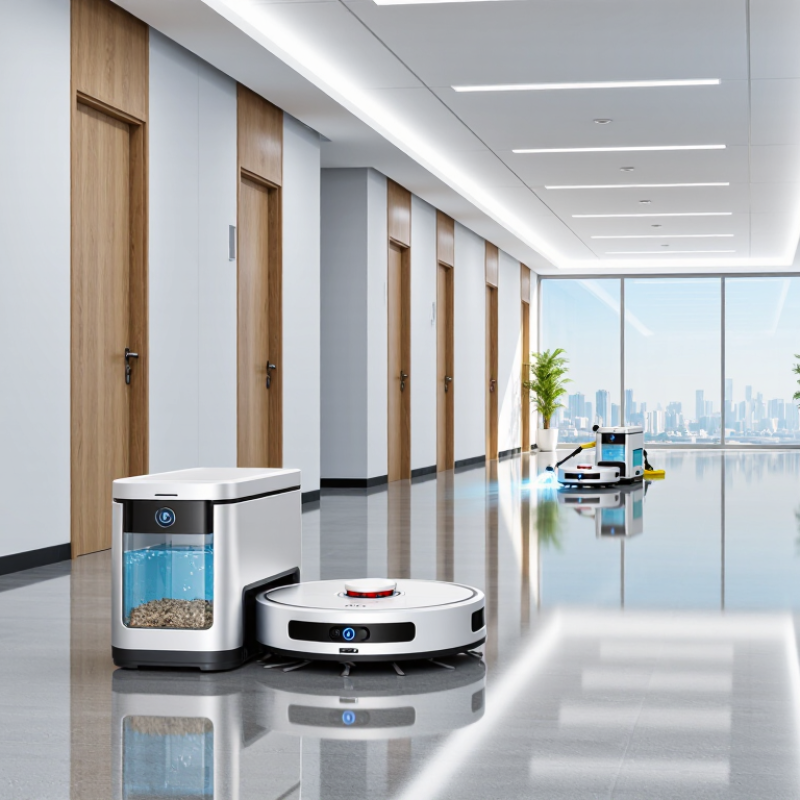
Smart cleaning robots are autonomous machines designed to vacuum, mop, or scrub indoor surfaces with limited human control. They combine sensors, software, motors, and cleaning tools in one compact system. Some models use cameras, laser sensors, or depth detection to understand rooms and avoid obstacles. Others rely on simpler contact sensors and programmed movement.
During operation, the robot measures walls, furniture, stairs, and open floor areas. Its navigation software builds a temporary map and chooses a route around the room. It can detect a chair leg, reduce speed, and redirect itself before contact. Many robots return to a charging station when power runs low. Some can also refill water, empty collected dust, or adjust cleaning intensity.
The results depend heavily on floor design and maintenance. Thick cables, dark surfaces, narrow corners, and reflective furniture can confuse sensors. It may miss dust beside a wall. Not perfectly. Regular filter cleaning, brush inspection, and software updates improve reliability. In my experience, these machines work best as daily support rather than complete replacements for people. A careful user still checks wet areas, tangled objects, and neglected edges. Smart cleaning robots are becoming more capable, but their decisions remain limited by sensor quality, room conditions, and imperfect mapping.
Why Are Smart Cleaning Robots the Future of Cleaning?
Core Technologies That Enable Autonomous Cleaning
Smart cleaning robots combine sensing, mapping, and controlled movement without constant supervision. Their core begins with cameras, lidar, depth detectors, and bump switches. These tools measure walls, furniture, stairs, and changing light. A reliable robot does not merely “see” a room. It compares repeated readings and identifies uncertainty near glass doors or dark carpets. In a real home, this matters when a chair moves ten centimeters overnight.
Navigation software converts those measurements into a live map. Simultaneous localization and mapping helps the machine estimate its position while updating the floor plan. Path-planning algorithms divide the area into practical cleaning routes. Obstacle avoidance works in milliseconds, but it is not perfect. Loose cables, reflective surfaces, and crowded corners can still confuse the system. That weakness deserves attention, not marketing language. Human supervision remains useful during early setup and unusual conditions.
Cleaning performance also depends on motors, airflow control, brush design, and battery management. A motor can adjust suction when dust levels change. A docking system may recharge the battery and empty collected debris. Embedded processors coordinate these tasks locally. Secure wireless connections can provide updates and status reports. Data protection should be part of the design. I would test thresholds, pet hair, and wet spots before trusting a robot in a busy workplace. Small failures reveal more than polished demonstrations. Good engineering learns from them.
Smart cleaning robots are changing daily cleaning by improving efficiency and consistency. In busy facilities, they can follow mapped routes through corridors, lobbies, and open offices. Their sensors detect walls, furniture, people, and unexpected obstacles. This reduces repeated manual checking and keeps cleaning schedules more predictable.
Tips: Start with clear floor maps and realistic cleaning zones. Remove loose cables before operation. Review cleaning reports each day. Watch edges and corners carefully. Human inspection still matters.
A robot can vacuum the same hallway at a steady speed, even during quiet night hours. It can also record completed routes, battery levels, and missed areas. This information helps supervisors adjust schedules using evidence rather than guesswork. Consistent passes can reduce visible dust near entrances and limit uneven results across large floors. Small details matter, especially around door tracks and chair legs.
However, smart equipment is not perfect. A low object may confuse its sensors. Wet footprints can remain after a scheduled cycle. I have found that reliable results depend on thoughtful setup and regular review. Staff should check filters, brushes, maps, and warning messages. Automation saves time, but it does not remove responsibility. The strongest cleaning process combines machine precision with human judgment.
Smart robots improve cleaning efficiency and consistency by automating repetitive floor-care tasks, following predefined routes, and delivering repeatable results.
This normalized operational comparison uses manual cleaning as the 100-point baseline. Smart robotic cleaning scores higher in route consistency, scheduled-task completion, and repeatability because software-controlled routines reduce variation between cleaning cycles.
Smart cleaning robots are appearing in places where floors are large, busy, or cleaned on tight schedules. In hospitals, they can handle corridors and public areas while staff focus on rooms requiring careful manual attention. At airports and shopping centers, scheduled overnight runs help cover long walkways and open floors. Offices, hotels, schools, and warehouses also use them for routine floor care.
The International Federation of Robotics reported about 205,000 professional service robots sold worldwide in 2023, across multiple application categories. That figure signals a growing market, not proof that every site benefits equally.
The best fit depends on the building. Robots need clear routes, safe charging areas, and floors they can navigate reliably. A warehouse may benefit from repeatable cleaning along marked aisles; a school may need flexible schedules around students and furniture. In food-processing facilities, cleaning plans must match hygiene procedures, so automation should support—not replace—trained staff and required checks. The global market research firm Interact Analysis has also tracked service-robot adoption across sectors, including commercial cleaning, reflecting demand for automated facility work.
Still, dust, cords, crowded entrances, and sudden layout changes can disrupt a run. Real-world trials matter. A robot can miss a corner. Humans still notice.
Smart cleaning robots promise steadier floor care, but wider adoption depends on more than navigation. The International Federation of Robotics reported that sales of professional service robots reached about 158,000 units in 2022, up 48% year over year. That figure spans many applications, not cleaning alone, so it signals momentum rather than proof that every facility is ready. A robot still needs clear routes, reliable maps, and time for staff to learn its limits.
The obstacles are visible on an ordinary shift. Wet thresholds, chair legs, crowded corridors, and changing room layouts can disrupt a carefully planned route. Integration can also be awkward: facilities may need to connect machines with access systems, elevators, or existing cleaning schedules. There is a cost. Buyers must weigh purchase, maintenance, software, and staff training against measurable savings, not just a polished demonstration. Small sites may struggle to justify the expense.
Data quality matters. In its World Robotics 2023 report, IFR identified labor shortages as a key driver of service-robot adoption, but shortages do not make every task suitable for automation. Human oversight remains essential for spills, delicate surfaces, and unexpected obstacles. That takes work. Operators also need a clear process for checking cleaning results and responding when a machine stops. Some days, the robot may save time; on others, resetting it can be the slow part.
It is an autonomous machine that vacuums, mops, or scrubs indoor floors. It combines sensors, software, motors, and cleaning tools. Human control remains limited.
The robot measures walls, furniture, stairs, and open floor areas. It creates a temporary map and chooses a route. Cameras, laser sensors, or contact sensors may guide movement.
They can detect chair legs, cables, and other objects. The robot may slow down and change direction. Thick cables and reflective furniture can still confuse it.
They can clean corridors, offices, hotels, schools, warehouses, airports, and shopping centers. Large open floors suit them well. Overnight cleaning may reduce daytime disruption.
Usually, no. It works best as daily support for routine floor care. People still check spills, wet areas, tangled objects, and neglected edges.
Wet thresholds, crowded entrances, narrow corners, and changed furniture layouts may disrupt navigation. A robot can also miss dust beside a wall. Not perfectly.
Clean the filter regularly and inspect the brushes for hair or debris. Software updates may improve reliability. Charging areas and routes should remain clear.
They should test the robot in real rooms, not only during polished demonstrations. Costs include equipment, maintenance, software, and staff training. Some days, resetting it takes longer.
Smart cleaning robots combine sensors, mapping systems, software, and automated cleaning tools to navigate spaces and carry out routine tasks with limited human guidance. Cameras, distance sensors, positioning technologies, and artificial intelligence help them recognize obstacles, plan routes, and adapt to changing environments. By following repeatable schedules and covering areas systematically, these machines can improve cleaning efficiency and consistency while allowing staff to focus on tasks that require human judgment.
They are used in settings such as offices, hotels, hospitals, warehouses, and other large or busy facilities. However, wider adoption still faces challenges, including upfront costs, maintenance needs, complex layouts, and the limits of autonomous operation. Human oversight remains important, especially when conditions change or a robot encounters an unexpected obstacle. As navigation and automation continue to improve, what is the future of smart cleaning robots? It is likely to involve more adaptable systems that work alongside people and support cleaner, more efficiently managed spaces.

NovaBot Robot