A comprehensive analysis of global commercial applications, sensor fusion advancements, and supply chain synergy driving next-generation sanitation efficiency.
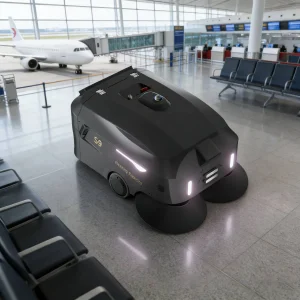
The global commercial and industrial outdoor cleaning market is undergoing a structural transition. Municipalities, warehouse operators, and facility management companies face critical challenges: acute labor shortages, escalating operational costs, and stringent occupational health and safety standards. Traditional manual sweeping and heavy industrial scrubbing can no longer economically handle massive exterior terrains.
Autonomous outdoor cleaning robots represent the convergence of advanced mechanical drivetrains, artificial intelligence, and robust industrial engineering. By integrating centimeter-level localization with high-efficiency mechanical sweepers, modern systems operate continuously in unstructured environments, delivering predictable cleaning outcomes and significant return on investment (ROI) metrics.
Analyzing the field performance and optimization parameters of specialized autonomous sweepers across primary industrial landscapes.
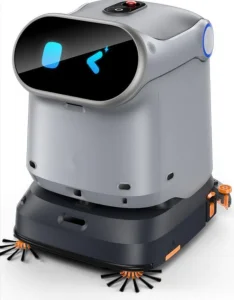
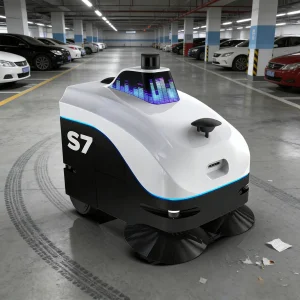
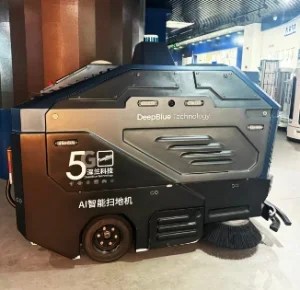
Navigating dense pedestrian environments requires robust safety layers and real-time obstacle avoidance. Equipped with 3D LiDAR, ultrasonic arrays, and stereo cameras, municipal sweeping robots safely operate alongside citizens, clearing fine dust, beverage containers, and organic debris from granite, brick, and asphalt walkways.
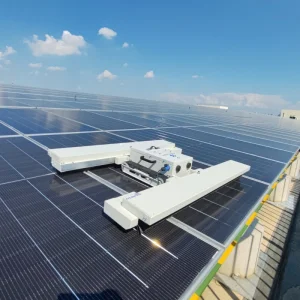
Accumulated dust and sand can degrade solar generation efficiency by up to 30%. In arid or desert regions, terrain-adaptive crawler cleaning robots with integrated water spray systems utilize trackless alignments to move along solar arrays, systematically removing debris without micro-cracking the PV cells.
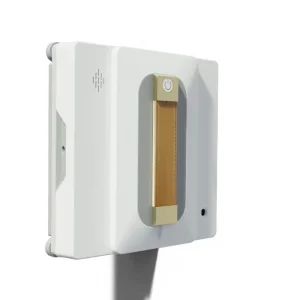
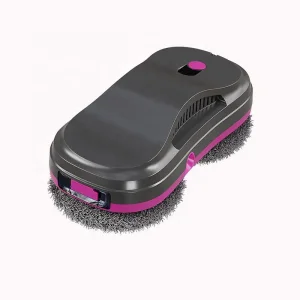
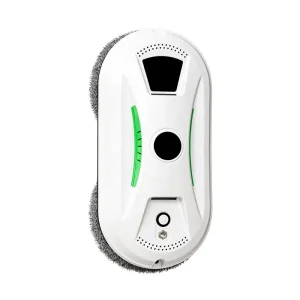
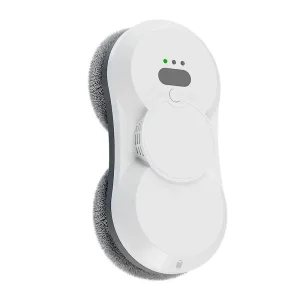
High-rise envelope maintenance poses extreme safety risks. Cable-secured, high-vacuum window cleaning robots execute high-pressure misting, micro-fiber scrubbing, and squeegee drying across glass curtain walls. Programmable scheduling allows for night operations, maintaining facility standards with zero human exposure.
The engineering breakthroughs enabling reliable localization, smart object classification, and continuous energy cycles.

Outdoor operation requires a fundamental upgrade from indoor vacuum navigation. Outdoor units rely on dual-antenna RTK-GNSS paired with multi-sensor odometry (IMU, wheel encoders, LiDAR SLAM) to maintain centimeter-level tracking, even in urban canyons or beneath dense tree canopies where satellite signals drop.
At the edge, deep learning models run on neural processing units (NPUs) to classify debris. The robot differentiates between harmless dry leaves (which can be vacuumed) and heavy metallic obstacles, animals, or humans, adjusting its path dynamically to balance cleaning coverage with safety.
A global leader in smart, automated cleaning solutions. We integrate robust design, flexible OEM/ODM manufacturing, and vertical supply chain coordination.
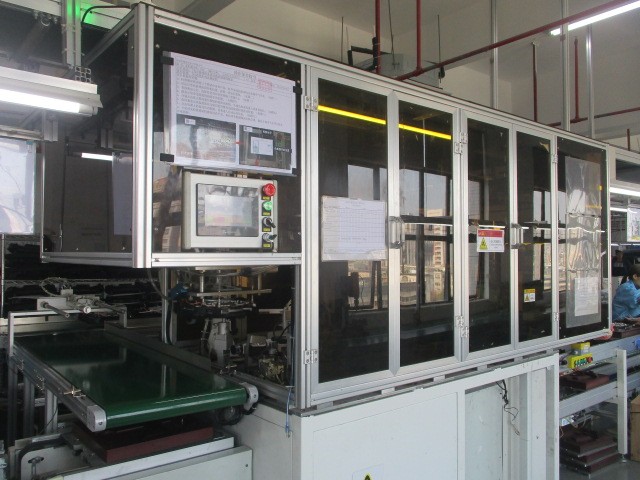
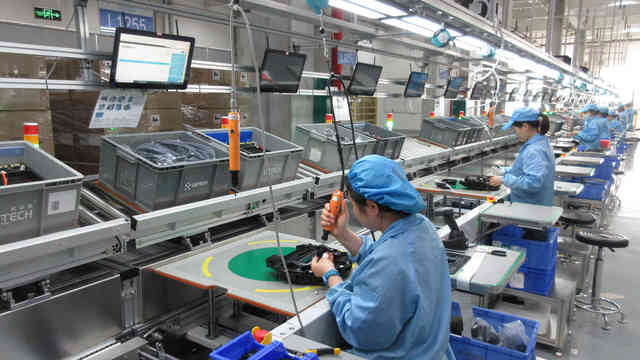
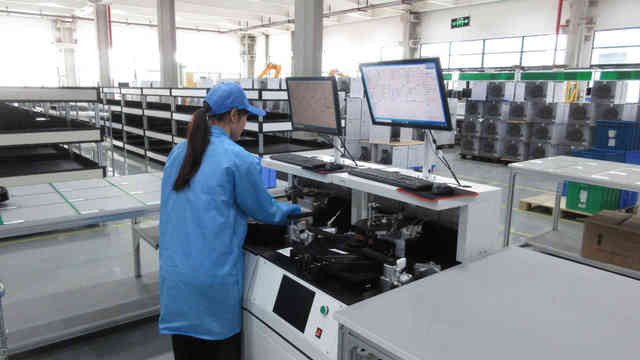
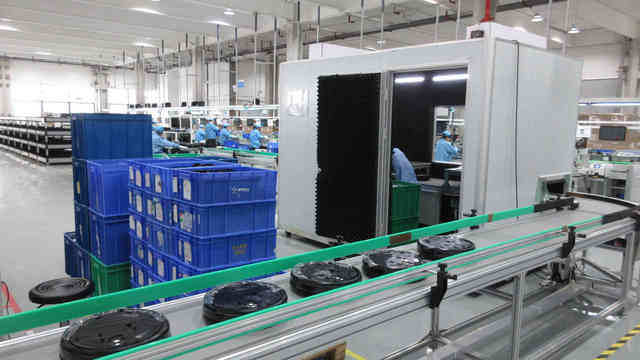
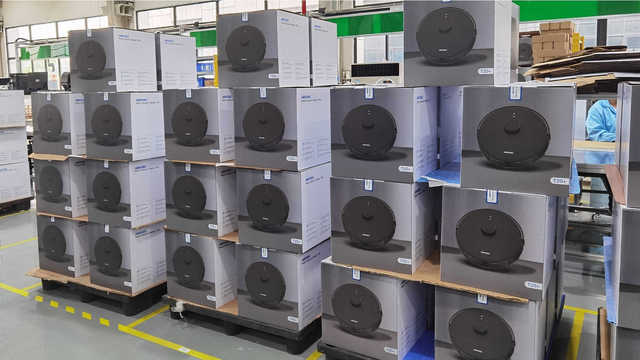
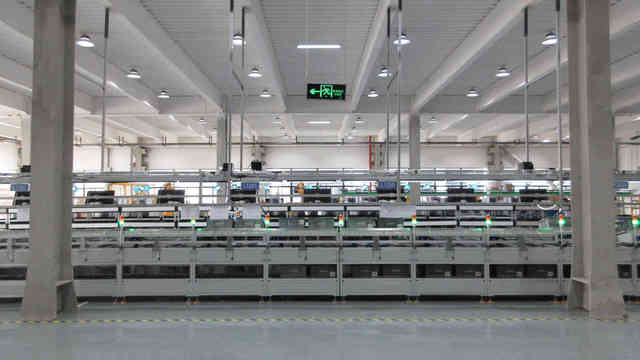
Established in 2014 and headquartered in Guangzhou, China, Guangzhou NovaBot Robot Co., Ltd. has grown into an innovative, technology-driven enterprise integrating research and development, manufacturing, quality control, and international sales. Operating a modern facility covering over 28,000 square meters with more than 320 skilled employees, NovaBot runs 18 automated assembly lines equipped with advanced testing laboratories to maintain strict quality standards at every production stage.
Our annual production capacity exceeds 1.2 million smart cleaning devices, serving distributors, retailers, and OEM/ODM partners across Europe, North America, Southeast Asia, and the Middle East. Our portfolio includes residential robotic vacuums, commercial floor scrubbers, solar panel cleaners, and UV sanitizing systems. By combining LiDAR navigation, IoT connectivity, and energy-efficient designs, NovaBot delivers reliable, high-performance cleaning solutions for homes, offices, hotels, hospitals, and industrial facilities.
Our localized supply chain in the Pearl River Delta allows us to source high-grade components—from brushless motors to complex optical sensors—rapidly and cost-effectively. This vertical integration helps us deliver reliable products while offering flexible OEM/ODM options and prompt technical support to clients worldwide.
Ensuring operational safety, data protection, and localized service networks for overseas enterprises.
NovaBot platforms carry CE, FCC, RoHS, and UL safety certifications. Every system is built to comply with local safety requirements, featuring redundant mechanical e-stops, active LiDAR buffers, and isolated battery management units (BMS) to ensure reliable operation.
Our fleet management system (FMS) allows operators to monitor, schedule, and configure units remotely. To safeguard user privacy, NovaBot utilizes end-to-end encrypted local servers that comply with regional data protection standards (such as GDPR in Europe).
We work with global distribution partners to maintain regional parts depots and local service networks. This support infrastructure helps reduce down-time by ensuring replacement parts, brushes, filters, and batteries are available locally.
Addressing common queries regarding deployment, battery lifespan, safety features, and customization support.
 NovaBot Robot